Hijos del Caribe

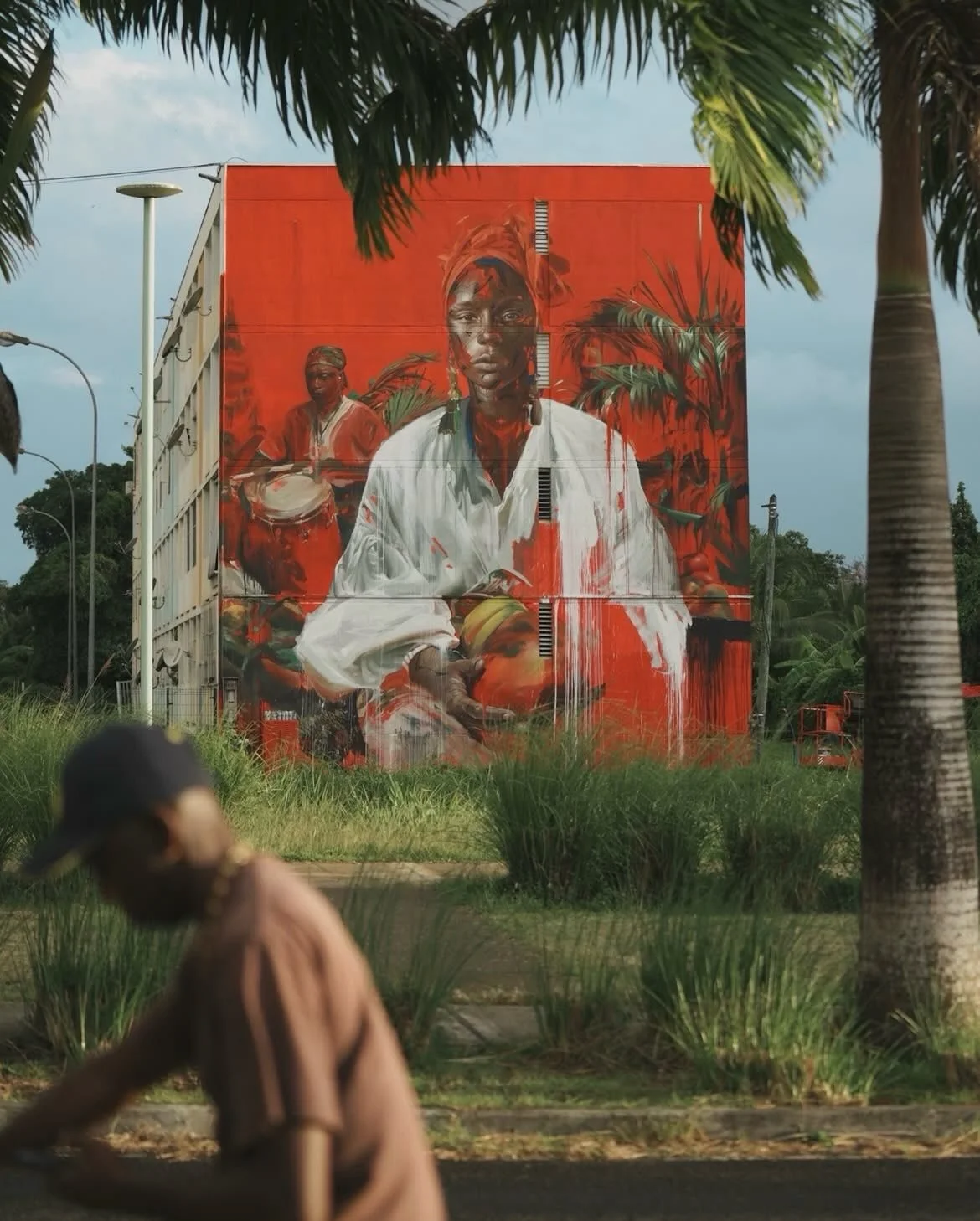
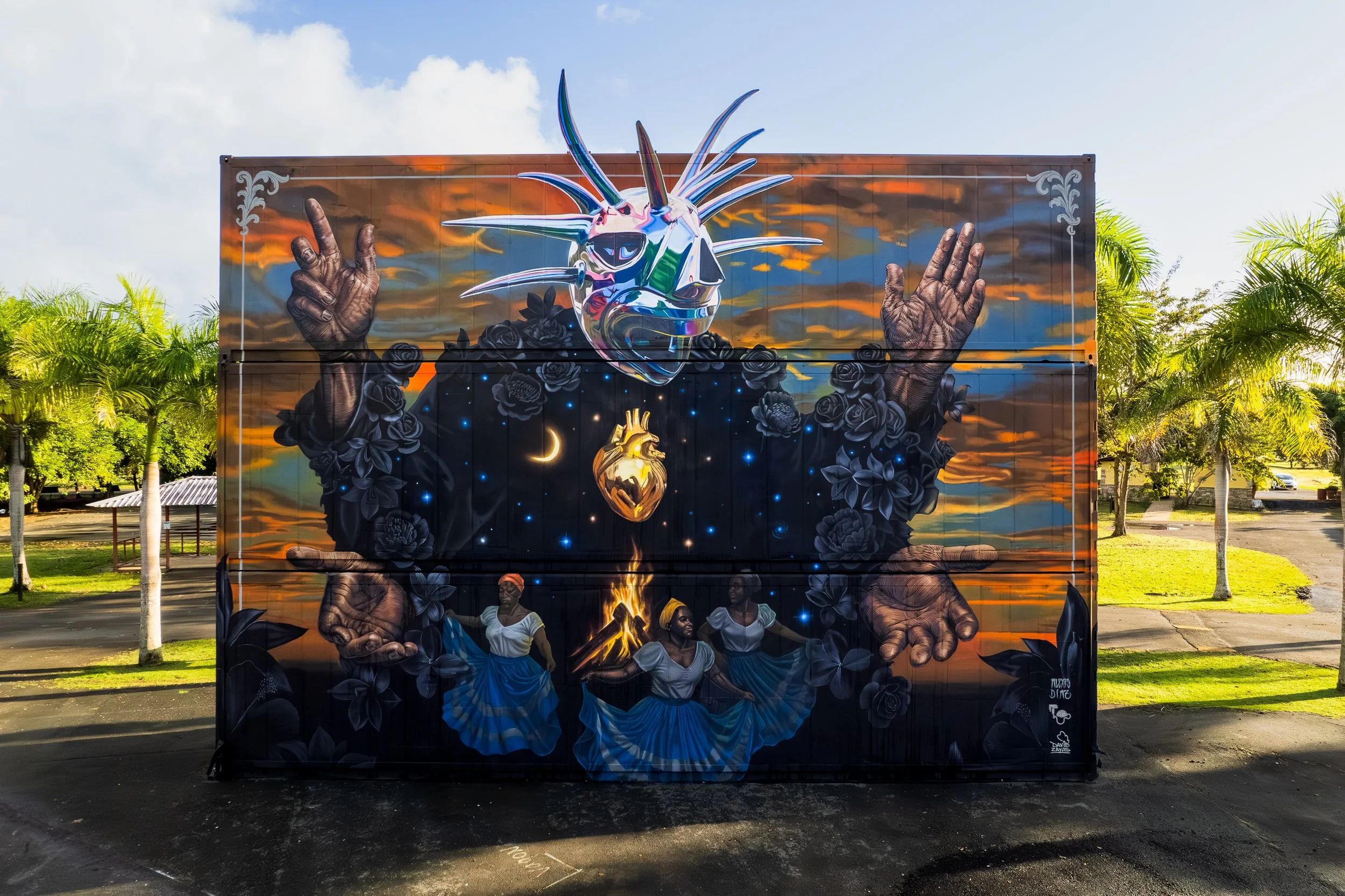
“Hijos del Caribe” - Mural by David Zayas, Alexis Díaz, and Bik Ismo in Color Caribe Festival, Dorado, Puerto Rico

Hijos del Caribe is a collaborative mural that explores Caribbean identity as a network of cultural connections transcending geographic borders. Rooted in the precise intention to identify and affirm the points of convergence uniting Caribbean peoples, the work articulates a powerful image of identity, belonging, and deep interconnection that extends outward from Puerto Rico across the wider Caribbean.

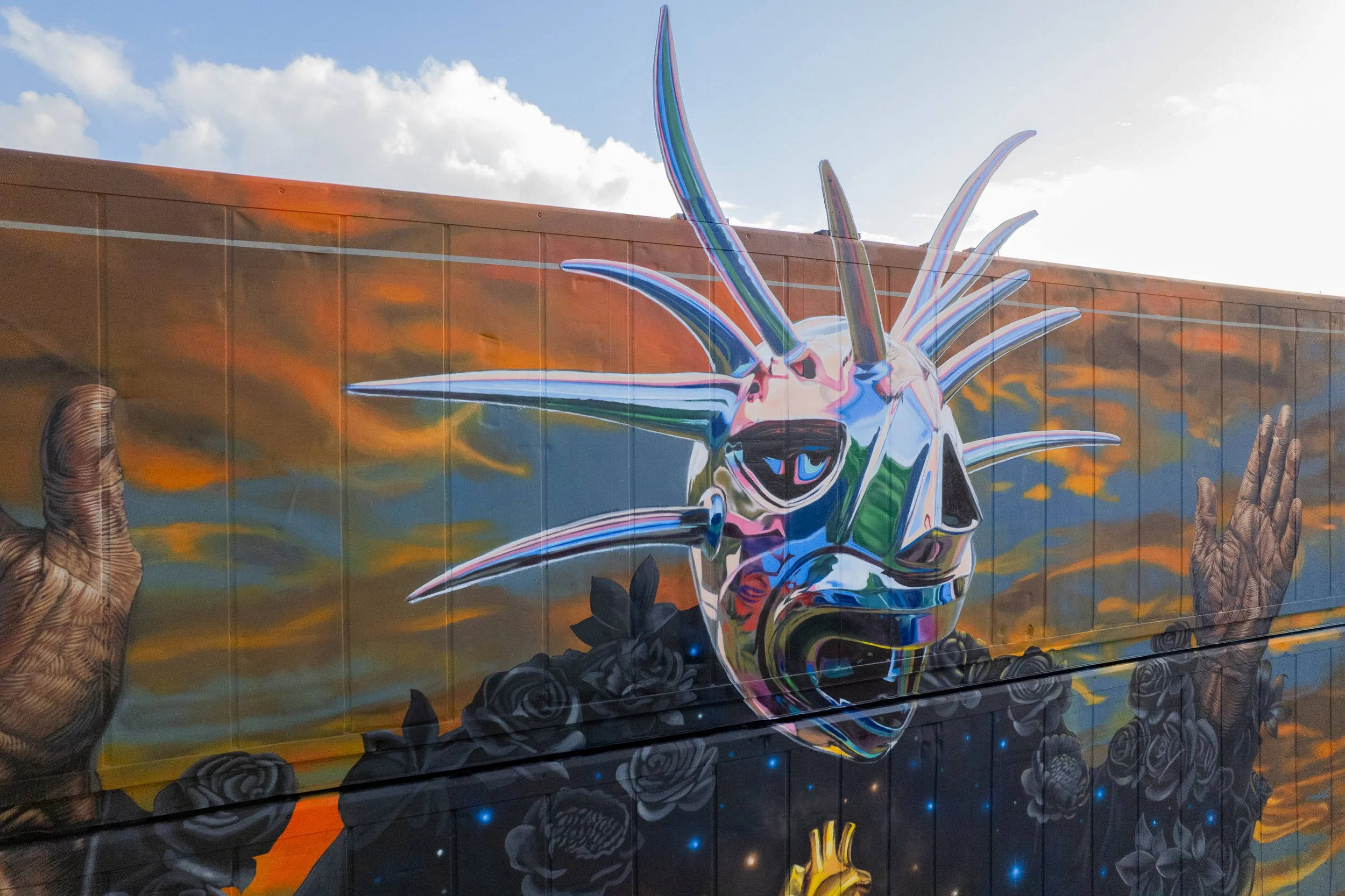
At the heart of the composition rises the vejigante, invoked as a living, transregional cultural archetype. Beyond its folkloric dimension, the vejigante emerges here as a potent symbol of ritual and resistance. It does not represent a specific individual, but rather a symbolic lineage: the children of a shared sea. Its presence is historically linked to rhythm, to the moving body, and to the festive-ritual space where music functions as collective language and action.

The mural is built on formal contrasts that reinforce its conceptual framework: day and night, organic matter and chromed surfaces, tradition and contemporary visual language. Within this structure, the mask, heart, and fire, created by Bik Ismo, serve as symbolic centers of persistence and contemporary vitality. The golden heart, positioned as the visual core of the composition, beats as a metaphor for a living, enduring culture; the chromed mask emphasizes an identity that adapts, reflects, and transforms. Together, these elements organize the emotional architecture of the mural.

The black floral garment, conceived by David Zayas, envelops the vejigante, heightening its ancestral and mystical presence while reinforcing the figure as a living, atemporal entity. Set against the glow of sunset, the scene rests at a symbolic threshold, charging the moment with profound transition and ritual potency. The composition is further structured by four hands, created by Alexis Díaz. The lower pair opens in a gesture of welcome and presentation toward the viewer, while the upper pair forms signs of greeting and announcement. Their technical precision and rich textures affirm the body as an archive of memory and a vessel for cultural transmission.

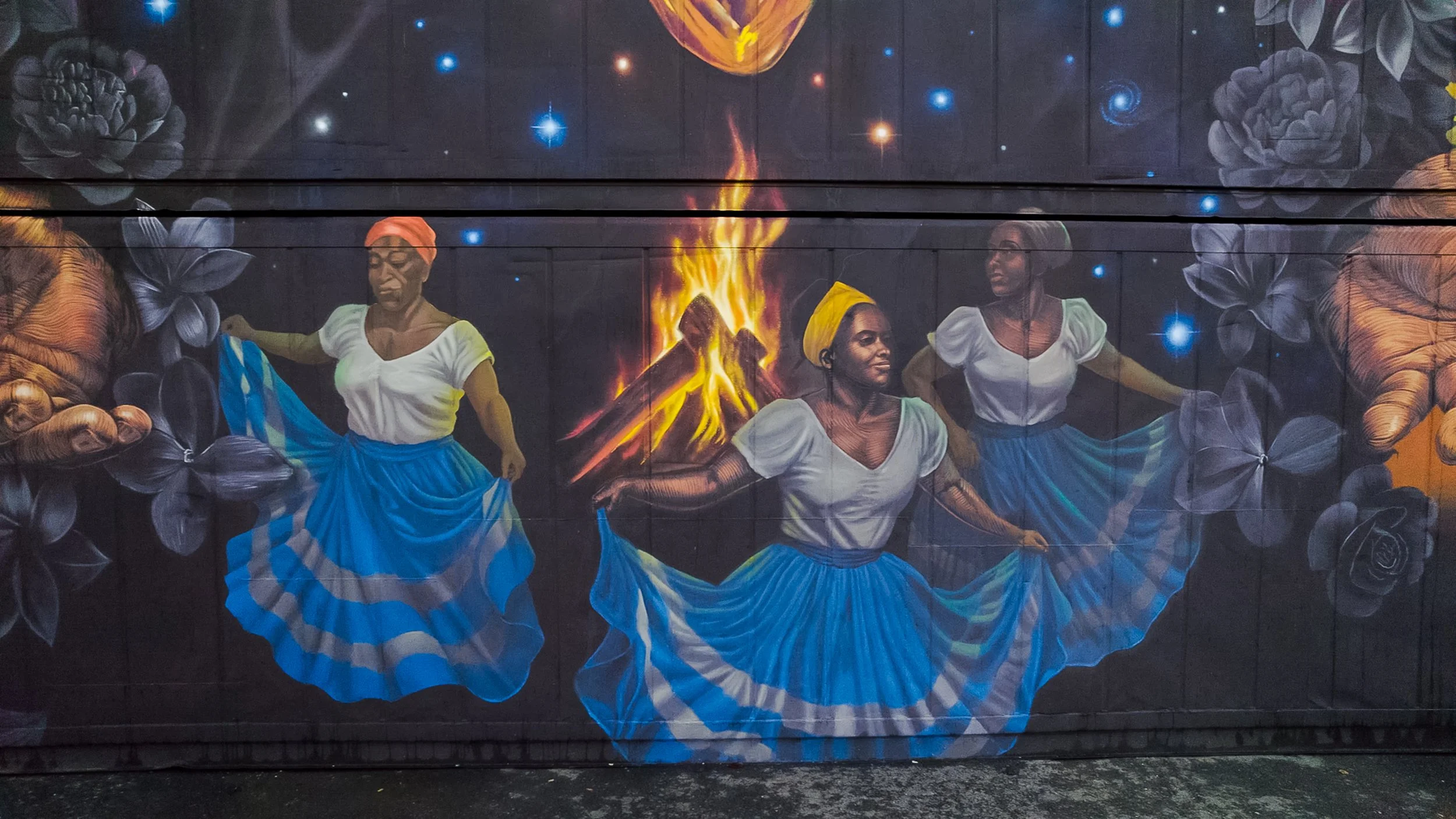
At the lower register of the scene, bomba dancers circle the fire at the vejigante's feet, forging a direct connection to bomba as a musical and embodied expression deeply rooted in Afro-Caribbean heritage. Rendered near life-size, these figures ground the work in the physical body and the lived experience of rhythm. Bomba appears not through instruments or graphic symbols, but through posture, gesture, and dynamic movement: a living dialogue between body and drum, improvisation, response, and community. Though sound is not depicted literally, music is perceived through the movement of the skirts, the tension of the bodies, and the energy that flows throughout the composition.

Hijos del Caribe presents itself as an image of strong visual impact and sustained depth. Rather than offering a closed definition of Caribbean identity, the work opens a symbolic space where image, body, and rhythm converge as memory, belonging, and collective cultural construction.

Here, music does not merely accompany the image - it sustains it.

The mural is heard without being heard.